11 Inspiring Types of Homeschool
Want to know what different types of homeschool are available? There are so many options to fit your style!

Depending on where you are in your homeschool journey, you may realize at this point that homeschooling is super customizable. Homeschool can be challenging – we all have difficult days! – but ultimately, the way you decide to homeschool should feel good. And because families get to teach using methods that they feel work best for them, types of homeschool used can vary quite a bit.
Read on for some of the most popular types of homeschool styles so by the time you’re done, you’ll know which ones would be a good fit for you, and that you’d like to try in your own home!
This post is all about 11 inspiring types of homeschool.
[As an Amazon Associate I earn from qualifying purchases at no extra cost to you. Thank you for using our referral links to shop!]

The Homeschool Handbook
For a beautiful, printable guide that covers what you need to know to homeschool
PLUS myth-busting, goal-setting and resources, go HERE.
Choosing a Homeschooling Style
As you’re figuring out the type of homeschool style you’d prefer, consider questions such as:
Do we like a more strict structured setup, or do we prefer more on-the-go, spontaneous learning?
Does our state have requirements we must include?
Do we want a curriculum with set lesson plans that we present and moderate, or do we want our homeschool education to be more flexible and child-led?
How do we want to incorporate our faith / religious beliefs?
How does our child learn the best?
What would feel good in our daily life?
Questions like these can help guide you down the path that’s a good fit! And keep in mind that you don’t have to choose just one. You can always combine and test different things out, then adapt as needed.
IMPORTANT: Keep in mind to check your state’s homeschooling laws to make sure you’re covering any necessary requirements.
11 Inspiring Types of Homeschool
1. Charlotte Mason Homeschooling
This style was developed by Charlotte Mason during her life over 100 years ago, and is still one of the most popular ways to homeschool. Her cornerstone priorities for learning were discipline (character development and good habits), life (bringing stories and the arts to life vs. memorizing facts), and atmosphere (the home learning environment).
If you have strong beliefs that children are to be respected and have access to nature, a connection to God / the Universe, and each other, this style of homeschool may really resonate with you!
With goals to nurture the heart AND the mind, a day in the life would likely incorporate both structured work and unstructured exploration, preferably outdoors!
Charlotte Mason Homeschool Resources:
Websites: Simply Charlotte Mason / Ambleside Online / Alveary
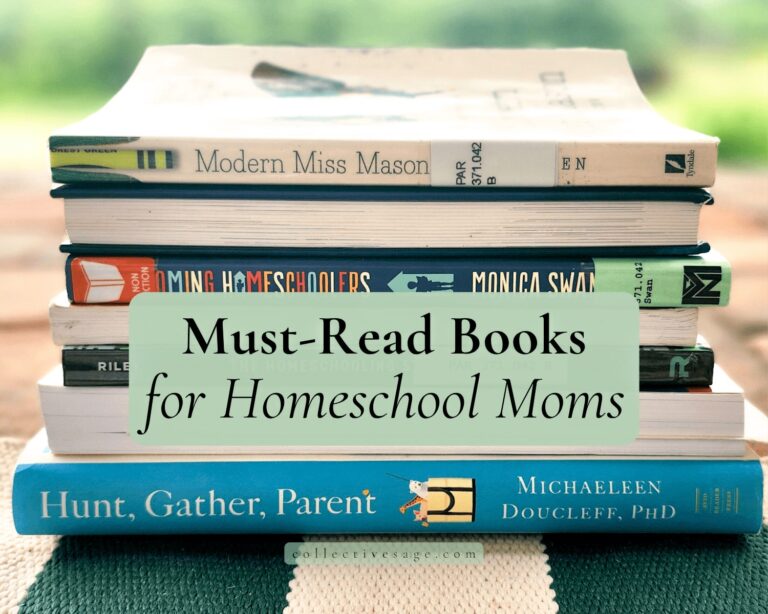
Books: For the Children’s Sake by Susan Schaeffer Macaulay / Modern Miss Mason / The Home Education Series / In Vital Harmony / Rethink Schooling Series
Look on education as something between the child’s soul and God. Modern Education tends to look on it as something between the child’s brain and the standardized test.
C. Mason

2. Classical Homeschooling
Classical Homeschool is a popular method that’s been around forever! It’s rooted in a three part system (The Trivium) based on logical thinking, abstract thinking, and critical thinking, and divided into stages based on age group.
The focus for younger children is called Grammar and includes memorization and fact-based info.
Middle school children (Dialectic stage) focus on the critical thinking, and reasoning behind the facts.
Older students move through the Rhetoric stage and build upon the first two levels with abstract thinking, communication skills, research and more.
Check out the Classical Conversations website to see if there’s a homeschool community in your area, because there are lots of people using this method and meeting up for it! If you want school to be rigorous and challenging, with a heavy emphasis on reading and writing, this might be a great fit for you.
Classical Homeschool Resources:
Websites: Veritas Press / BiblioPlan / Classical Conversations / FreedomProject Academy (Online Schooling)
Books: The Well-Trained Mind / Rethink Schooling: History Book of Centuries
3. Waldorf Homeschooling
Waldorf Homeschooling could be described as a holistic approach focused on engaging the senses – mind, body, and spirit. Creativity, imagination, and lots of play is encouraged, along with a sense of community and developing positive self-esteem.
Work can be rigorous as the child gets older, but there is an overall flow and consistent rhythm. Technology is discouraged with a Waldorf lifestyle as it’s felt to put a damper on creativity and social interaction. Instead, the emphasis is placed on nature, music, art, and movement!
Waldorf Homeschool Resources:
Websites: Waldorfish / Earthschooling / Waldorf Essentials
Books: Understanding Waldorf Education / The Waldorf School Book of Soups / Word Mastery Primer (1st + 2nd Grade) / The Waldorf Main Lesson / The Waldorf Book of Poetry: Discover the Power of Imagination
4. Traditional Homeschooling / School – at – Home
Traditional homeschooling or the school-at-home approach is what so many of us gravitate towards, because it’s most like what we are used to! This method could be described as mimicking aspects of a standard school environment in the home, such as: routines, following a schedule, classroom-like school supplies, having a designated learning space, and having a structured curriculum available.
Traditional homeschool is honestly where we felt most comfortable starting. Private + public school education was all we knew, and wanted the most stream-lined approach vs. pulling curriculum from multiple sources for our three kids.
I went searching for a curriculum that would cover lots of subjects and we could look forward to using each day…this search landed us with The Good and the Beautiful! This curriculum may not even be considered “traditional” but it felt supportive, covered all the subjects we wanted, AND made it super easy for us as beginners.
As our homeschool has evolved we have made lots of room for flexibility based on our season of life and what the kids are needing in the moment.
Traditional (School-at-home) Homeschool Resources:
Websites: ABCMouse / Abeka / Christian Light / Easy Peasy / The Good and the Beautiful / Sonlight / My Father’s World
Books: 180 Days: 1st Grade Workbooks / 180 Days: 2nd Grade Wookbooks / 3rd Grade BIG Workbook / Masterbooks
5. Unschooling
Unschooling (not to be confused with deschooling) is sometimes called “self-directed” cause it’s alllll about flexibility and flow, according to the child’s interests. Because the child is studying what they love, they’re learning to love LEARNING itself. And hopefully that love of learning can serve them for the rest of their lives!
For example, if your kid is curious about butterflies, you could spend days or weeks (the timing is fluid, too) studying about them.
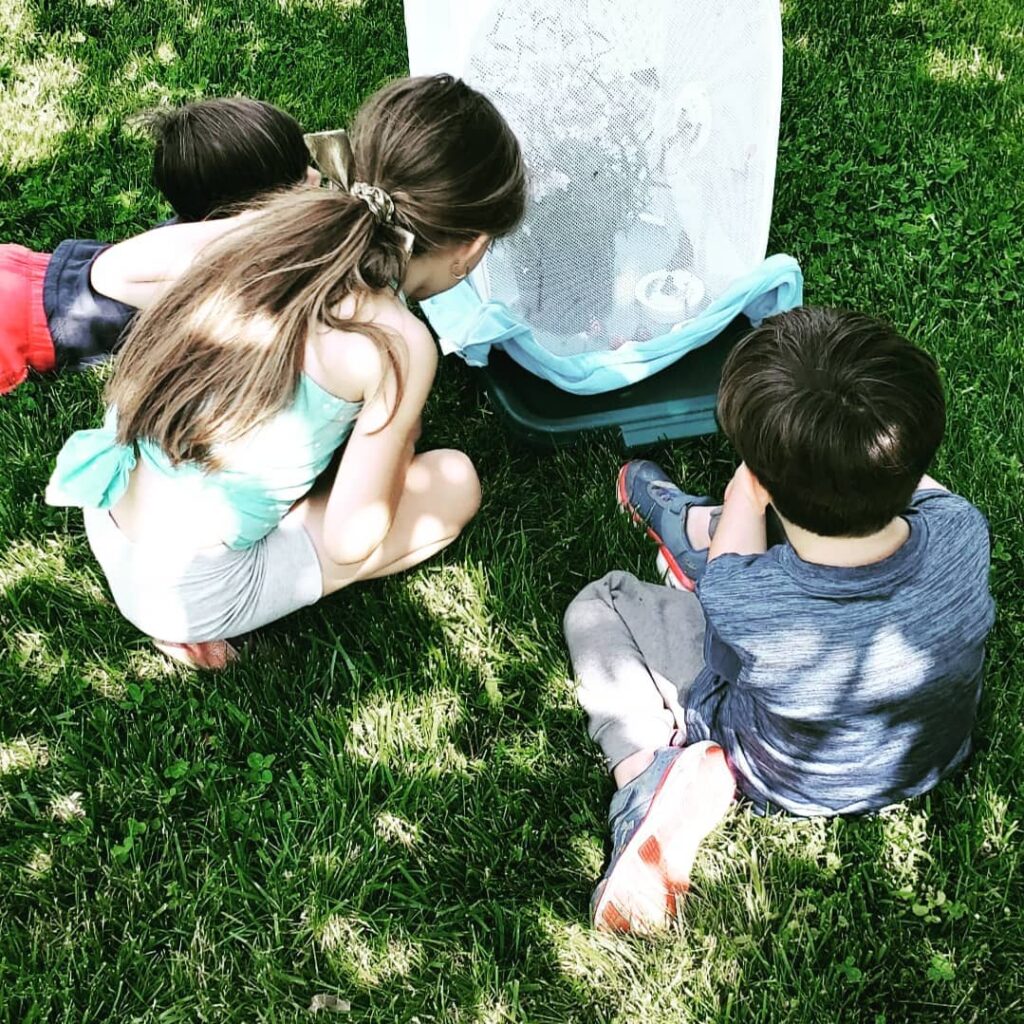
You might think about diving into books about butterflies, which might lead to completing butterfly art projects, and visiting a butterfly garden. A caterpillar —> butterfly kit at home could also give your child an amazing hands-on experience!
We used this kit to raise and release painted lady butterflies a few years ago, and again this past spring… it’s one of our favorite memories (they also learned a ton)!
If you’re looking for flexibility and freedom, while fostering your child’s sense of independence and self-esteem, this method is worth looking into.
Unschool Homeschool Resources:
Websites: Fun-Schooling (Thinking Tree Bookstore) / Creating Your Homeschool Lifestyle / Stark Raving Dad
Books: 1000 Hours Outside: Activities to Match Screen Time with Green Time / Unschooled: Raising Curious, Well-Educated Children Outside the Conventional Classroom / Radical Unschooling / Raising Free People: Unschooling as Liberation and Healing Work
6. Montessori Homeschooling
A Montessori Homeschool approach, similar to unschooling, is child-led and leans into their natural abilities to learn and grow. The student has the opportunity to learn at their own pace, usually uninterrupted…independence is greatly encouraged!
What makes Montessori learning stand apart from unschooling is that there’s planned curriculum involved.
Another trademark of a Montessori school is the environment itself, which ideally includes a space to play out practical/real life work. (See website resources below for an example.) Homeschoolers may work together in small groups to facilitate learning as well!
Montessori Homeschool Resources:
Websites: Reach for Montessori / multisori – Montessori, Unburdened / The Montessori Teacher
Books: The Montessori Book for Babies and Toddlers / The Montessori Book for Kindergarten and Preschool / The Parents’ Guide to Montessori
The land is where our roots are. The children must be taught to feel and live in harmony with the Earth.
M. Montessori

7. Reggio Emilia
The Reggio Emilia approach to homeschool got its name from the town in Italy where it was created after WW2. With similarities to Montessori, and lots of project-based learning, one of the nuances of this homeschooling style is a focus on a rich environment.
The environment is important enough here to be viewed as “the third teacher,” with the parent and child being the first two. The space should be engaging in its setup (smells, textures, etc.) as to encourage, amplify, and support the child’s learning.
And while the hands-on learning is student-driven, further critical-thinking connections and understandings are guided by the parent.
Reggio Emilia Homeschool Resources:
Websites: Artful Teaching. Joyful Learning. / Etsy Market
Books: Oh, Now I Understand! / Working in the Reggio Way / Bringing Reggio Emilia Home: An Innovative Approach to Early Childhood Education
In the Reggio Emilia preschools, however, each child is viewed as infinitely capable, creative, and intelligent. The job of the teacher is to support these qualities and to challenge children in appropriate ways so that they develop fully.
l. boyd
8. Unit studies / Project-Based Learning
Project-Based Learning and Unit Studies are just how they sound! A theme is chosen (usually by the parent) and different subjects are based on and around that theme. The parent offers guidance when needed but the child can be encouraged to find resources, test different methods, and be self-guided.
The thought is that hand-on experience helps with critical thinking + retaining information. It also sparks curiosity, and there’s space for the child to learn at a pace that works best for them.
Unit Studies (Project-Based) Homeschool Resources:
Websites: Five in a Row / Beyond the Page / KONOS
Books: Project Based Learning Made Simple / Project-Based Homeschooling: Mentoring Self-Directed Learners / Project Based Teaching

9. Roadschooling
Roadschooling is also how it sounds…school on the road! Travel is an amazing teacher and families get real-world experience by getting out there and experiencing it. Math, science, art, literature lessons (and more) can be woven into camping, RV life, monuments + museums, national parks, the beach…anywhere.
In each environment, families have endless learning opportunities. Think of the animals, plant life, the culture, the history, etc. which can be amplified with complementary learning materials (online and off). If the family chooses, school work can be accomplished while traveling to the next location. Either way, roadschooling is super flexible for adventurous families!
Roadschooling Resources:
Websites: Time4Learning / FullTime Families / FaceBook Group: Homeschooling Unschooling Roadschooling Worldschooling
Books: Homeschool Adventures: Learning Through the Power of Field Trips / The Year We Ruined Our Lives

10. Worldschooling
Worldschooling – all the things about Road Schooling but moreso traveling to another country to experience living and learning.
Worldschooling Resources:
Websites: DuoLingo / Facebook Group: Homeschooling Unschooling Roadschooling Worldschooling / We Are WorldSchoolers
Books: Wonder Year: A Guide to Long-Term Family Travel and Worldschooling / The Everywhere Classroom / Nat Geo Bucket List Family Travel: Share the World With Your Kids on 50 Adventures of a Lifetime / Adventures Around the World – Social Studies & Geography: Worldschooling
11. Eclectic Homeschooling
Eclectic Homeschool is also known as relaxed homeschool because it’s a mixing and blending of different methods and resources. Though “relaxed,” there can still be lots of structure to it because it’s designed by the family. And it doesn’t have to be anything fancy. Eclectic homeschooling tends to happen naturally as things need to be adjusted.
The standard goal is to have a personalized, well-rounded learning experience that’s a great fit for all involved.
Eclectic Homeschool Resources:
Websites: Oak Meadow / Tuttle Twins / Khan Academy
Books: Home Learning Year by Year / Rethink Schooling / Do It Yourself Homeschool Journal
Frequently Asked Questions (Types of Homeschool FAQs):
Q: What is the most successful homeschooling method?
The most successful homeschool method is the one that is working for your family! Because homeschooling is so flexible and customizable, it’s all what you decide success is for you and your child.
Q: What are the 5 homeschool styles?
5 popular homeschool styles are Traditional, Charlotte Mason, Classical, Unschool, and Waldorf. But as you can see from the list above, there are many more types of homeschool out there!
The Homeschool Handbook
For a beautiful, printable guide that covers what you need to know to homeschool
PLUS myth-busting, goal-setting and resources, go HERE.
How to Develop your Homeschooling Style
Now that you’ve gotten a brief overview on the different types of homeschooling, you can choose one (or five) to explore further!
And if you’re feeling indecisive, set aside some time to tune in and remember your goals again. Remember, this is all just FYI so you know what’s out there, and in hopes that you will find so much inspiration in the possibilities!

3 Comments